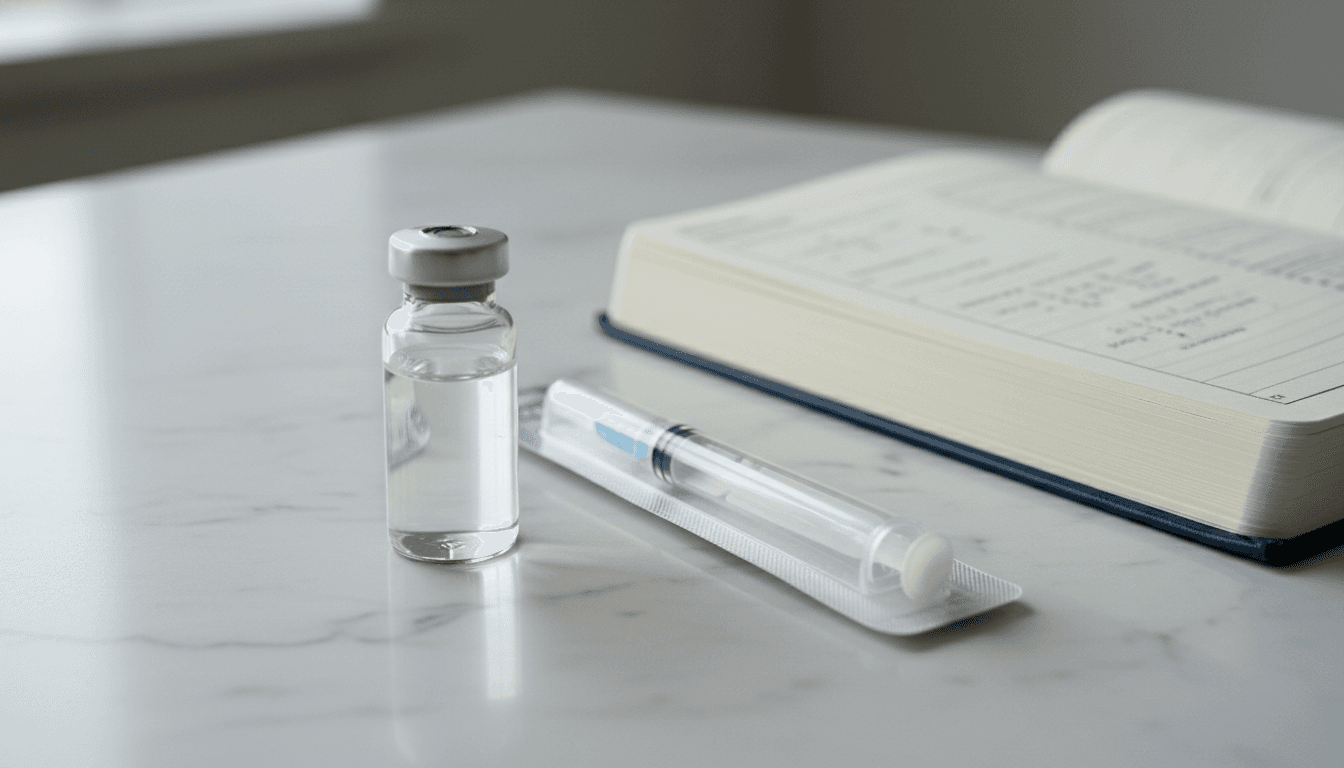
The USP monograph differences between bacteriostatic water for injection and sterile water for injection, preservative, intended use, and beyond-use dating. Reference content. Not medical advice.
Key points
- 01Bacteriostatic water for injection, USP. Sterile water containing 0.9% benzyl alcohol as a bacteriostatic preservative. The USP monograph describes its use as a diluent for multi-dose parenteral preparations.
- 02Sterile water for injection, USP. Preservative-free sterile water. The USP monograph describes single-dose parenteral use only. The absence of a preservative is the defining distinction from bacteriostatic water.
- 03Bacteriostatic sodium chloride, USP. A further variation, sterile saline with 0.9% benzyl alcohol as preservative. Included in some compounding references as an alternative diluent where tonicity matters.
- 04Preservative-free saline for injection, USP. Sterile 0.9% saline without preservative. Described in the USP monograph for single-dose use.
Frequently asked questions
What does 'bacteriostatic' mean on the label?+
Bacteriostatic describes a preservative that inhibits bacterial growth within a multi-dose vial. In bacteriostatic water for injection, USP, the preservative is 0.9% benzyl alcohol, as specified in the USP monograph.
Why is sterile water for injection limited to single-use?+
Sterile water for injection contains no preservative. Once a preservative-free vial is entered, the USP monograph and manufacturer package inserts describe a single-use convention consistent with infection-control practice.
Is benzyl alcohol safe in the quantities present in bacteriostatic water?+
Benzyl alcohol at 0.9% is the specified preservative in the USP monograph for bacteriostatic water. Neonatal use is contraindicated per FDA labelling due to historical reports of gasping syndrome; adult parenteral use of bacteriostatic water is described in the manufacturer package inserts without the same restriction.
Can tap water or distilled water be substituted?+
No. Neither tap water nor non-USP distilled water meets the sterility, endotoxin, or labelling requirements described in the USP monograph for parenteral diluents.
What beyond-use date is described for opened bacteriostatic water?+
Manufacturer labelling typically describes a beyond-use period of approximately 28 days following initial entry, subject to storage conditions specified on the label. USP <797> and the product-specific labelling are the primary references.
Which diluent is referenced in published research protocols for peptides?+
Published research-context reconstitution procedures commonly reference bacteriostatic water for injection, USP, for multi-dose vial preparation. Peer-reviewed clinical-trial methods sections frequently specify the diluent explicitly; non-clinical research literature typically cites the USP monograph.