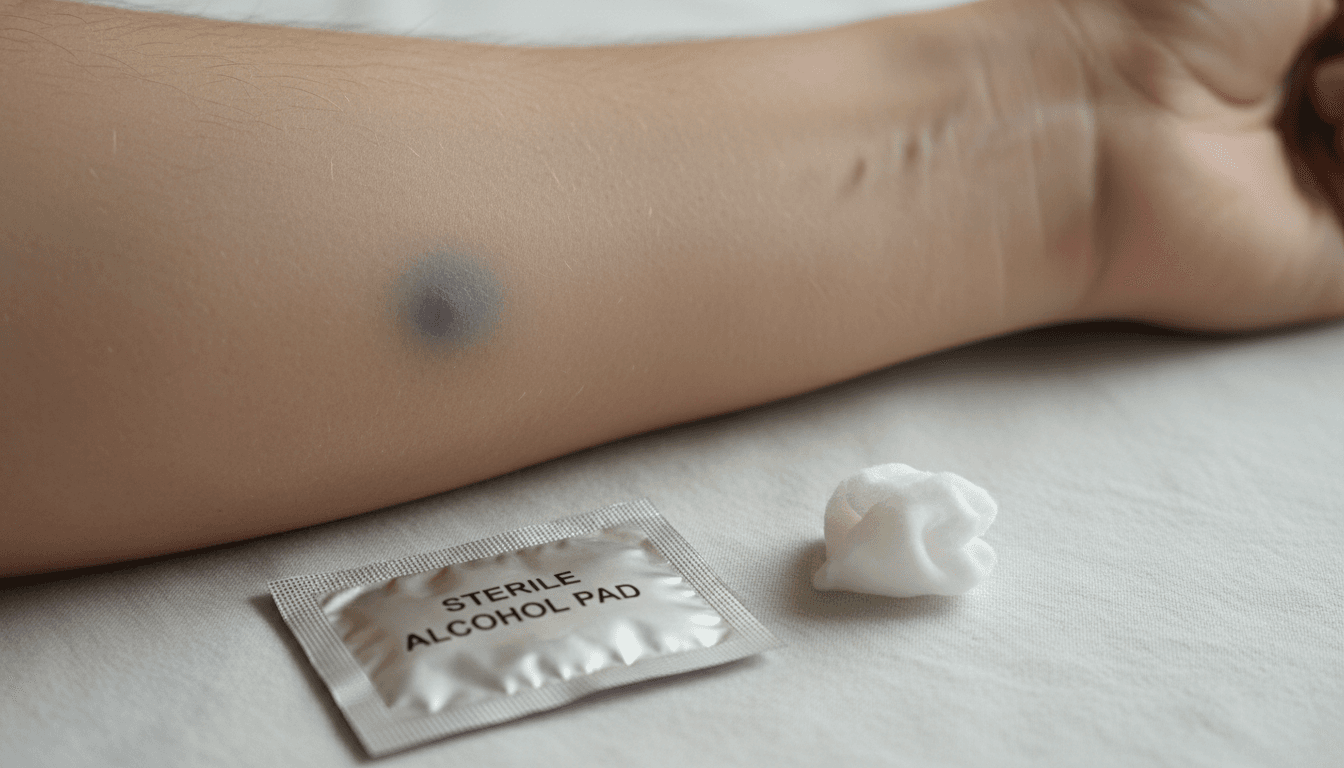
What the injection-technique literature and device Instructions for Use describe about reducing injection-site pain: needle choice, temperature, technique, and the red flags that warrant prescriber contact. Patient-education reference. Not medical advice.
Key points
- 01Let the medication reach room temperature first. GLP-1 pen Instructions for Use describe injecting a refrigerated dose as more uncomfortable. The package inserts allow the pen to sit out for a set window before use; a dose at room temperature is associated with less stinging in the patient-education literature.
- 02Use a finer, shorter needle. Smaller-diameter (higher-gauge) needles are associated with less insertion pain in Frid et al. 2016. The 32G 4 mm short needle is the size the GLP-1 trials standardized on for most adults. See the best pen needles for GLP-1 guide for verified options.
- 03Let the alcohol dry fully before inserting. CDC injection-safety guidance describes allowing the alcohol prep pad to air-dry before insertion. Residual alcohol carried into the puncture is associated with stinging and irritation in the nursing-education literature.
- 04Use a new single-use needle every time. A reused needle tip is dulled and deformed after the first use (Frid et al. 2016), which increases insertion force and pain. The labeled convention is one new needle per injection. See the guide on how often to change a pen needle.
- 05Insert at the documented angle without hesitating. The published technique literature describes a confident, perpendicular insertion for 4 to 6 mm needles (90 degrees). Slow or hesitant insertion and oblique angles are associated with more discomfort and tissue drag.
- 06Inject into subcutaneous fat, not muscle. Subcutaneous injection targets the fat layer. Frid et al. 2016 describes intramuscular delivery, more likely with a long needle in a lean site, as more painful and as altering absorption. Match needle length and the pinch technique to the site.
- 07Rotate sites on a schedule. Repeated use of one spot is associated with tenderness and with lipohypertrophy, the thickened tissue described in FIT recommendations that can change sensation and absorption. The three-zone rotation guide covers the protocol.
- 08Depress the plunger at a steady, unhurried rate. Rapid plunger depression is described in nursing-reference literature as raising local tissue pressure and discomfort. A steady rate, with the dwell time the pen insert specifies, is the described convention.
- 09Apply gentle pressure after withdrawal, do not rub. Post-injection rubbing is described in nursing-education literature as increasing local trauma and soreness. Gentle pressure with clean gauze is the described convention.
- 10Know when pain is a red flag. Published nursing-reference material describes contacting a clinician for pain that is severe, worsening, or accompanied by expanding redness, warmth, swelling, fever, or discharge, which can indicate infection rather than ordinary injection soreness.
Frequently asked questions
Is some pain after a subcutaneous injection normal?+
Brief, mild stinging or soreness at the site is described as common in the injection-technique literature and in GLP-1 pen patient information. It is typically self-limited. Severe, worsening, or spreading pain is described as a reason to contact a prescriber.
Why does my Ozempic or Wegovy injection hurt?+
The technique literature attributes injection-site pain to factors you can often modify: a cold dose, a dull or reused needle, a larger-gauge needle, alcohol that has not dried, hesitant insertion, and overused sites. The manufacturer Instructions for Use and Frid et al. 2016 describe each of these.
Does needle size affect how much it hurts?+
Yes. Frid et al. 2016 associates smaller-diameter (higher-gauge) needles with less insertion pain. The 32G 4 mm short needle is the size the GLP-1 trials standardized on for most adults. The best pen needles for GLP-1 guide compares options.
Does injecting cold medication hurt more?+
GLP-1 pen Instructions for Use and patient-education references describe a refrigerated dose as more uncomfortable to inject. The package inserts permit a defined out-of-fridge window so the dose can reach room temperature before use.
How can I make injections hurt less?+
The published conventions are: bring the dose to room temperature, use a new fine short single-use needle, let the alcohol dry, insert confidently at the documented angle into subcutaneous fat, rotate sites, depress the plunger steadily, and avoid rubbing afterward. Persistent pain is a prescriber conversation.
When is injection-site pain a sign of a problem?+
Published nursing-reference material identifies severe or worsening pain, or pain with expanding redness, warmth, swelling, fever, or discharge, as warranting prescriber contact, because these can indicate infection (cellulitis or abscess) rather than ordinary soreness, consistent with IDSA soft-tissue infection guidance.