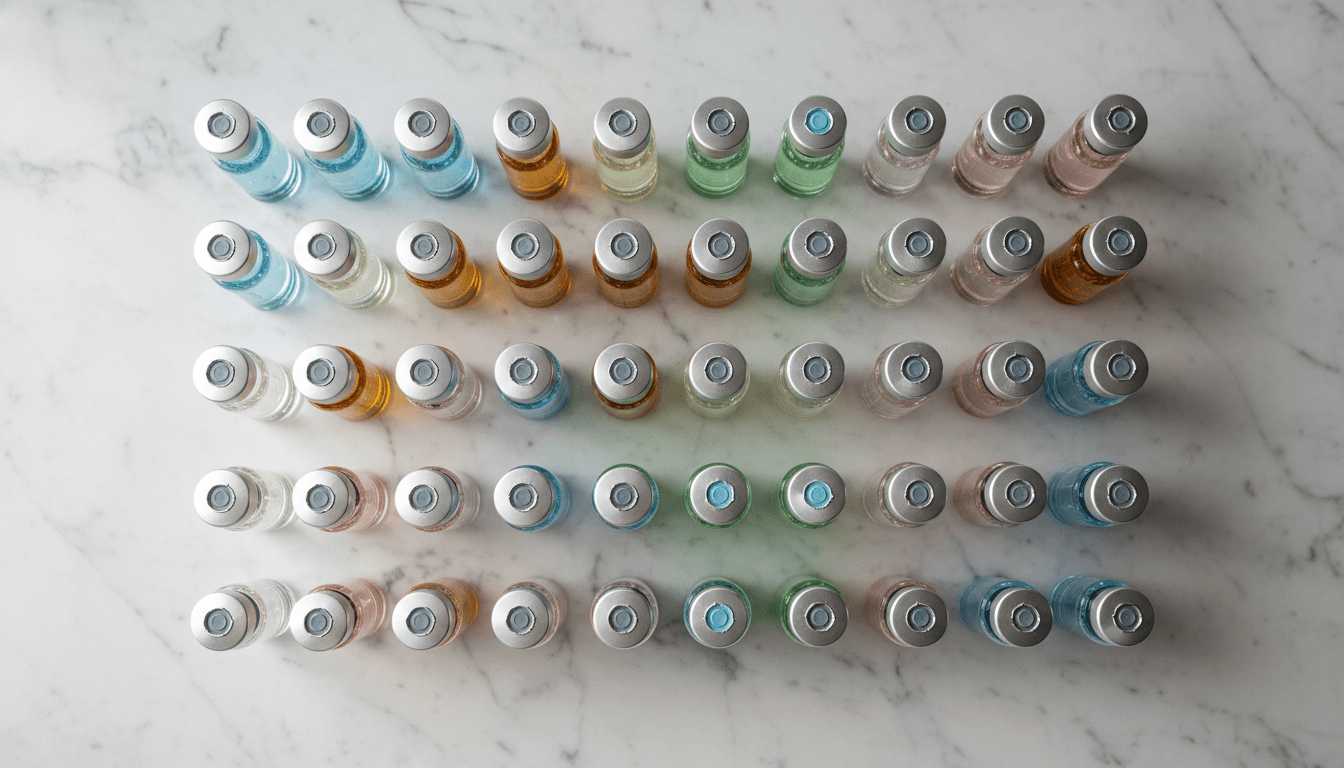
How to reconstitute cagrilintide for research: choosing water, the concentration math, mixing, and storage. Research use only. Not medical advice.
Key points
- 01Read the research-context frame first. Cagrilintide is an investigational amylin analog studied in trials, not an approved medicine you can reconstitute at home for use. This page is for educational and research purposes only, not intended for human use, and not medical advice.
- 02Bacteriostatic water for multi-entry vials. Because a lyophilized vial is usually entered more than once, bacteriostatic water with 0.9 percent benzyl alcohol is the common diluent. Sterile water is for a single entry. See our bacteriostatic vs sterile water comparison for the tradeoff.
- 03Set concentration by the water you add. The peptide mass is fixed by the vial; you set the strength by the water volume. Adding 2 mL to a 10 mg vial gives 5 mg per mL. Decide the target concentration and let our peptide calculator return the per-dose syringe volume.
- 04Add water gently, then swirl. Swab both stoppers, insert the needle at an angle, and let the water run down the glass wall onto the cake, not directly into it. Swirl slowly until fully clear; do not shake, which foams and stresses the peptide.
- 05Inspect before you accept the mix. A properly reconstituted solution is clear and free of visible particles. Cloudiness or floating flecks means something is off; our cloudy peptide troubleshooting guide walks through the likely causes and what to discard.
- 06Refrigerate and track the clock. Store the reconstituted vial at 2 to 8 C away from the freezing back wall, and label the mix date. How long it stays usable is covered in our guide on how long a reconstituted peptide lasts.
Frequently asked questions
What water is used to reconstitute cagrilintide?+
Bacteriostatic water is the usual choice for a vial entered more than once, because its benzyl alcohol limits microbial growth. Sterile water suits a single entry. This is research technique, not medical advice.
How do I set the concentration?+
Divide the labeled peptide mass by the volume of water you add. For a 10 mg vial, 1 mL gives 10 mg per mL and 2 mL gives 5 mg per mL. Fix the concentration first, then use a calculator for per-dose volume.
Why is my cagrilintide solution cloudy?+
Cloudiness can come from shaking, cold shock, or an unsuitable diluent. Swirl rather than shake and let a cold vial reach room temperature. See our cloudy peptide troubleshooting guide for the full checklist.
Is cagrilintide approved?+
No. Cagrilintide is an investigational compound studied in clinical trials. This page is for educational and research purposes only, is not intended for human use, and is not medical advice.