The best sharps containers, compared
If you inject at home (GLP-1, insulin, fertility, TRT), used needles need an FDA-cleared sharps container, not a coffee can. Three picks for different households, plus how disposal actually works.
ByThe InjectCompass Editorial TeamUpdatedJune 9, 20269 min read
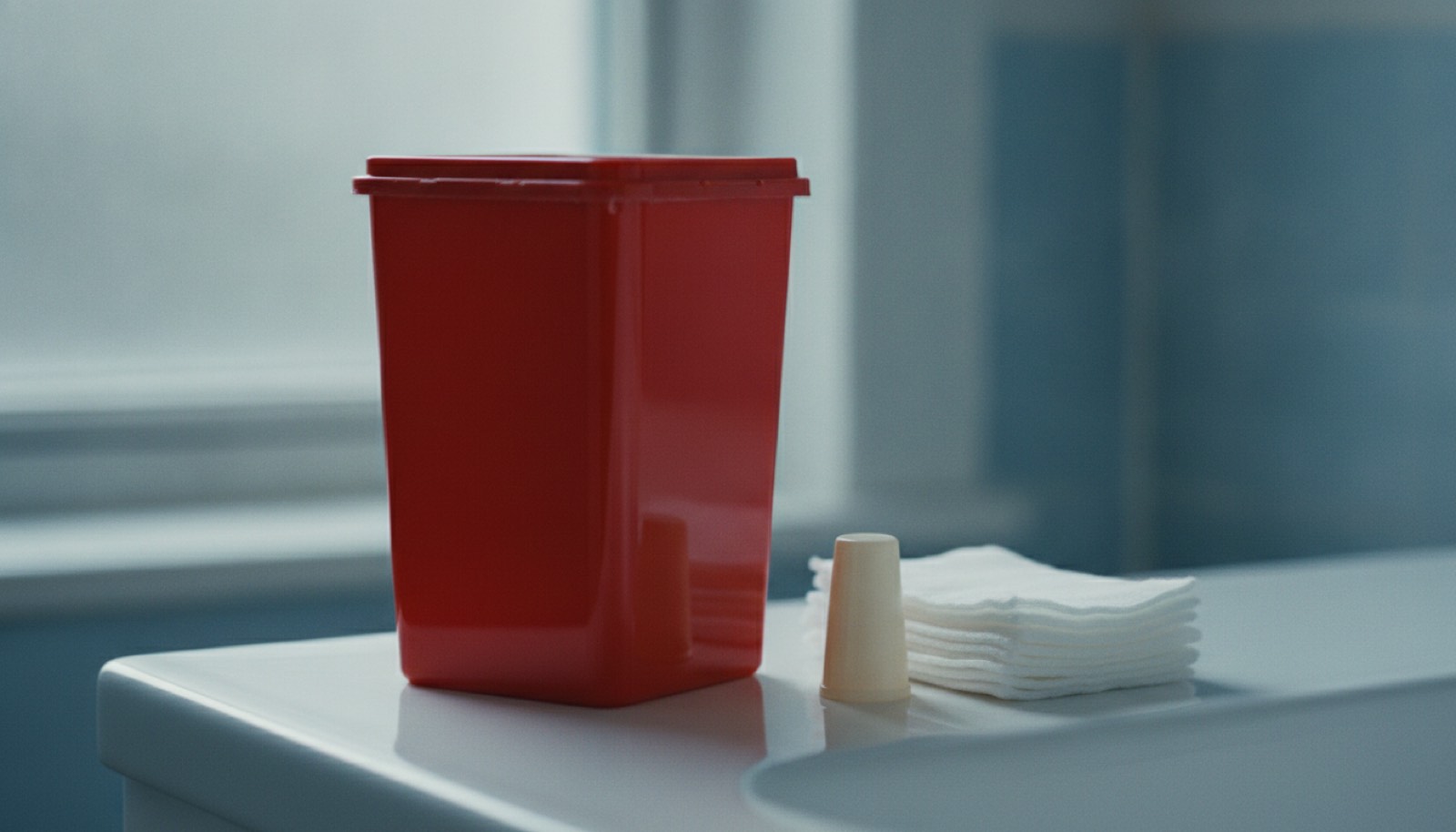
BD Home Sharps Container, 1.4 Quart
For most people injecting at home, the standard 1.4-quart BD container is the right answer: FDA-cleared, puncture-resistant, with a one-way deposit slot and a temporary-close lid for between uses plus a permanent lock when it is full. It sits on a bathroom shelf, holds months of pen needles or syringes for a typical once-weekly or daily injector, and it is the container most pharmacists hand you when you ask. You only need bigger or mail-back if your situation calls for it, which the picks below cover.
Referenced across the literature, in order.
- 01
 Our pick· $10-14
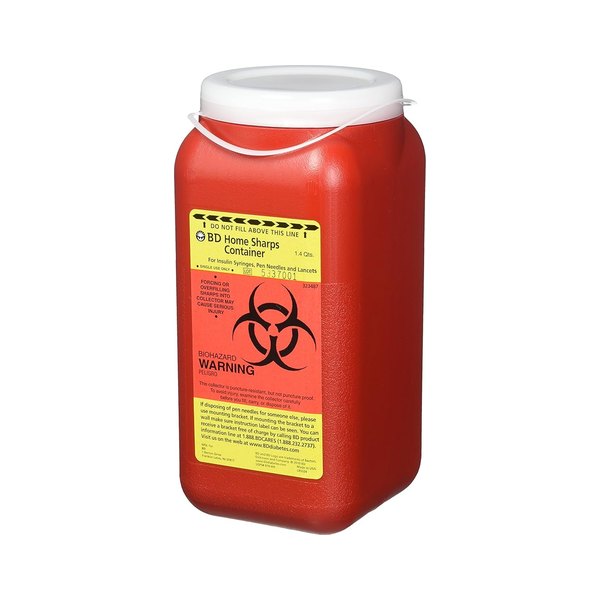
BD Home Sharps Container, 1.4 Quart
The default home container, and the one to buy unless you have a specific reason not to. FDA-cleared and puncture-resistant, with a one-way deposit opening so nothing comes back out, a temporary-close lid for between injections, and a permanent snap-lock for when it is full. The 1.4-quart size holds months of pen needles for a once-weekly GLP-1 user or a daily insulin injector before it needs replacing. When full, you do not bin it: take it to a pharmacy or hospital drop-off, or use a mail-back box (below). Cheap, correct, and universally available.
- 02
 Best for no local drop-off· $25-40
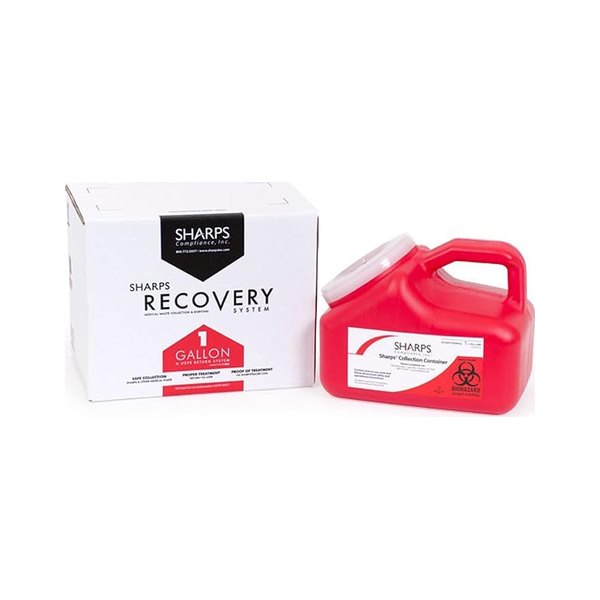
Sharps Compliance Mail-Back Container, 1 Gallon
The clean answer when your area has no pharmacy take-back or municipal sharps drop-off, which is common in much of the US. You fill the container, seal it, and mail it back in the included prepaid postage box for compliant destruction, no hunting for a disposal site, no driving a full container around. It costs more than a plain container because the price includes the disposal service and shipping. Worth it specifically for rural addresses, apartment dwellers without a nearby drop-off, and anyone who would otherwise be tempted to put needles in household trash (which is unsafe and illegal in many states).
- 03
 Best for households with multiple injectors· $18-28
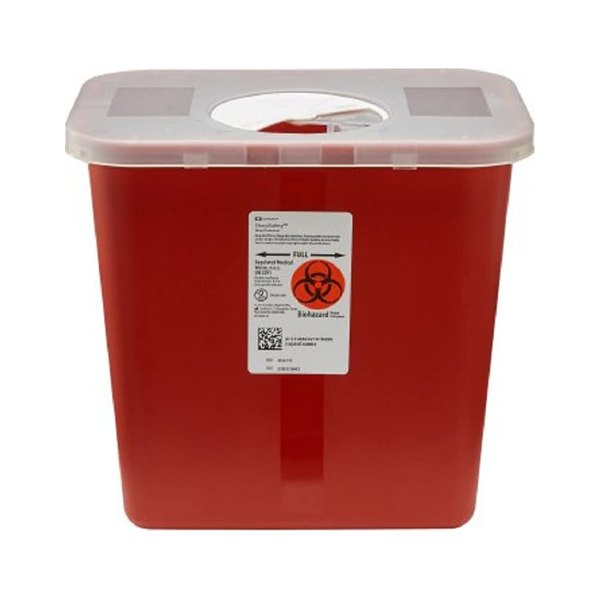
Covidien Monoject Sharps Container, 2 Gallon
The larger 2-gallon option for homes where more than one person injects, or where injection frequency is high enough that a 1.4-quart fills up fast (multiple daily insulin doses, fertility cycles, TRT plus a GLP-1). Same FDA-cleared puncture-resistant build, just a bigger footprint, and it can be wall-mounted to keep it out of reach of children and pets. Overkill for a single once-weekly injector, exactly right for a busy household, and it means fewer disposal trips per year.
How this reference was written
- The technique we verified
- We verified each step against the relevant manufacturer Instructions for Use, Frid et al. 2016 (Mayo Clinic Proceedings), and the CDC injection-safety guidance. Where sources disagreed, we defaulted to the most conservative and noted the discrepancy.
- The sources we triangulated
- Peer-reviewed injection-technique literature, manufacturer package inserts, USP monographs, CDC and WHO published standards, and FDA labelling. Links and DOIs in the Sources section below. Unsourced claims are not published.
- The failure modes we tested
- We document known-wrong outcomes for the common mistakes, partial dose delivery, injection-site bruising, pen misuse, reconstitution error, and describe what the published literature says to do when they happen. The red-box call-outs are drawn from these failure modes.
- What we're still verifying
- Pen manufacturer Instructions for Use change. FDA labelling gets updated. A named credentialed reviewer (RN, NP, or PharmD) is joining the masthead by month 6. Until then, verify every technique decision with your own prescriber and the package insert that came with your medication.
What the literature answers next.
- Do I really need a sharps container, or can I use a coffee can?
- You need a proper sharps container. A coffee can or milk jug can be punctured by needles, can leak, and is not accepted by most disposal programs, and many US states legally require an FDA-cleared container for home-generated sharps. A real container is puncture-resistant, leak-proof, has a one-way opening, and locks permanently when full. They cost about ten dollars, so the DIY route saves nothing and creates a real injury and legal risk for you, your family, and sanitation workers.
- What size sharps container should I get?
- For one person on a once-weekly GLP-1 or daily insulin, the standard 1.4-quart container holds months of needles and is the right default. Choose a 2-gallon container if multiple people in the home inject or your injection frequency is high. Choose a mail-back container if you have no local pharmacy or municipal drop-off. Bigger is not automatically better, it just means fewer replacements but a larger object on your shelf.
- How do I dispose of a full sharps container?
- Never in household trash or recycling. The main routes are: a pharmacy, hospital, or clinic take-back program; a municipal household-hazardous-waste or sharps drop-off site; or a mail-back container with prepaid postage. Rules vary by US state, so check your state's guidance, but the universal rule is that a sealed, FDA-cleared container goes to a designated disposal point, not the curb.
- Can I use one sharps container for GLP-1, insulin, and other injections?
- Yes. A sharps container is for any used needle, syringe, or lancet regardless of what was in it, so one container handles your GLP-1 pen needles, insulin syringes, fertility, or TRT needles together. The container does not care about the medication, only that the sharp goes in safely and the container is disposed of correctly when full.
- When should I replace or close a sharps container?
- Permanently seal and replace it when it reaches the fill line, usually about three-quarters full, never overfill it or try to press sharps down. FDA-cleared containers have a fill-indicator line and a permanent locking lid for exactly this. Overfilling is how needle-stick injuries happen during disposal, so close it early rather than cramming in a few more.
A new manufacturer Instructions-for-Use revision. A peer-reviewed injection-technique paper that reports a different outcome. An FDA label update. A change to USP chapter guidance. We revise this page within a week of the cited source changing and mark what changed at the bottom.
Sources
About The InjectCompass Editorial Team
The InjectCompass Editorial Team is a small group of writers working from published nursing-education literature, manufacturer package inserts, and peer-reviewed injection-technique research. Our content is reviewed against published best practice before publication. We are adding a named credentialed reviewer (RN, NP, or PharmD) to the masthead; until then, readers should verify all guidance with their own prescriber and the manufacturer package insert that came with their medication. If you spot an error, write to corrections@injectcompass.com, we want to know.
Related posts
Injection Needle Sizes: 29G vs 30G vs 31G
Gauge and length conventions for subcutaneous injection as described in the published technique literature. Comparison of ancillary insulin-syringe products. Not medical advice.
12 min readThe Best Pen Needles for GLP-1 Pens
Ozempic, Wegovy, Mounjaro and Zepbound pens do not come with needles. The pen needles that fit, which gauge and length to pick, and four options for different budgets and bodies.
9 min readHow Often to Change a Pen Needle
Pen needles are labeled single-use. What the injection-technique literature and device Instructions for Use describe about reusing pen needles, and the trade-offs reuse introduces. Patient-education reference. Not medical advice.
7 min readYour First Injection, a one-page cheat sheet.
A printable, step-numbered PDF covering supplies, technique, site rotation, and the three questions to ask your prescriber. Free.
By subscribing, you agree to our Privacy Policy. One practical email per week. Unsubscribe anytime.