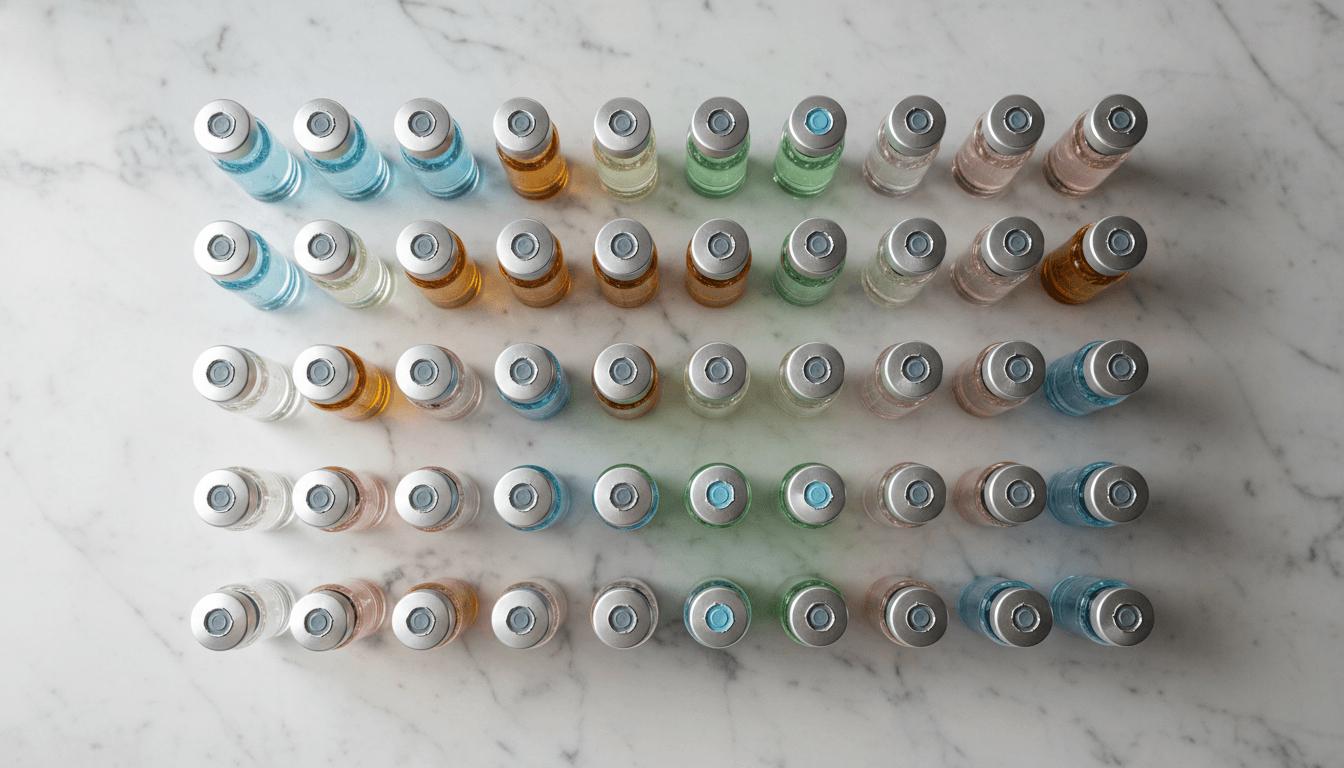
How to reconstitute MOTS-c for research: bac water volume math, gentle mixing, storage, and handling. Research use only. Not medical advice.
Key points
- 01Research-context framing comes first. MOTS-c is a research peptide, not an approved medicine. This page describes laboratory reconstitution technique for educational and research purposes only. It is not intended for human use and is not medical advice.
- 02Choose bacteriostatic water as the diluent. Bacteriostatic water contains 0.9 percent benzyl alcohol, which lets a multi-use vial be entered more than once over a short window. Sterile water suits a single use. The comparison is covered in our bacteriostatic vs sterile water guide.
- 03Decide the concentration before you add anything. Concentration equals total peptide mass divided by the water you add. Adding 2 mL of bac water to a 10 mg vial gives 5 mg per mL. Our peptide calculator turns a target dose into a syringe volume so the math is fixed before the needle moves.
- 04Add the water slowly down the vial wall. Swab both stoppers, draw the chosen volume of bac water, then let it run gently down the inside glass rather than jetting onto the powder. A soft stream protects the peptide from mechanical stress during mixing.
- 05Swirl, never shake. Roll or swirl the vial between your fingers until the solution is clear. Shaking whips in air and foam and can shear a fragile peptide. If it will not dissolve, rest it at room temperature for a few minutes and swirl again.
- 06Store cold and label the mix date. Once reconstituted, keep the vial refrigerated at 2 to 8 C, away from the freezer wall, and write the date it was mixed on the label. Our guide on how long reconstituted peptide lasts covers the discard window.
Frequently asked questions
How much bacteriostatic water do I add to MOTS-c?+
There is no single answer; it depends on the target concentration. A common approach is 1 to 2 mL of bac water per 10 mg vial, which gives 10 or 5 mg per mL. Fix the concentration first, then use a calculator. Research use only.
Can I shake the vial to speed dissolving?+
No. Shaking foams the solution and can damage a delicate peptide. Swirl or roll the vial gently until clear, and give it a few minutes at room temperature if the powder is slow to dissolve.
How should reconstituted MOTS-c be stored?+
Refrigerated at 2 to 8 C in the original vial, kept away from the cold back wall so it cannot freeze, and labeled with the mix date. See our guide on how long a reconstituted peptide lasts for the discard window.
Is MOTS-c an approved medicine?+
No. MOTS-c is a research peptide, not an approved drug. This page is for educational and research purposes only, is not intended for human use, and is not medical advice.