When to self-inject and when a caregiver should help: site access, dexterity, vision, needle anxiety, and how to hand off safely. Not medical advice.
Key points
- 01Most subcutaneous injections can be self-given. Abdomen and front-of-thigh sites are reachable and visible to the person injecting, which is why most people manage their own subcutaneous shots after a short learning curve.
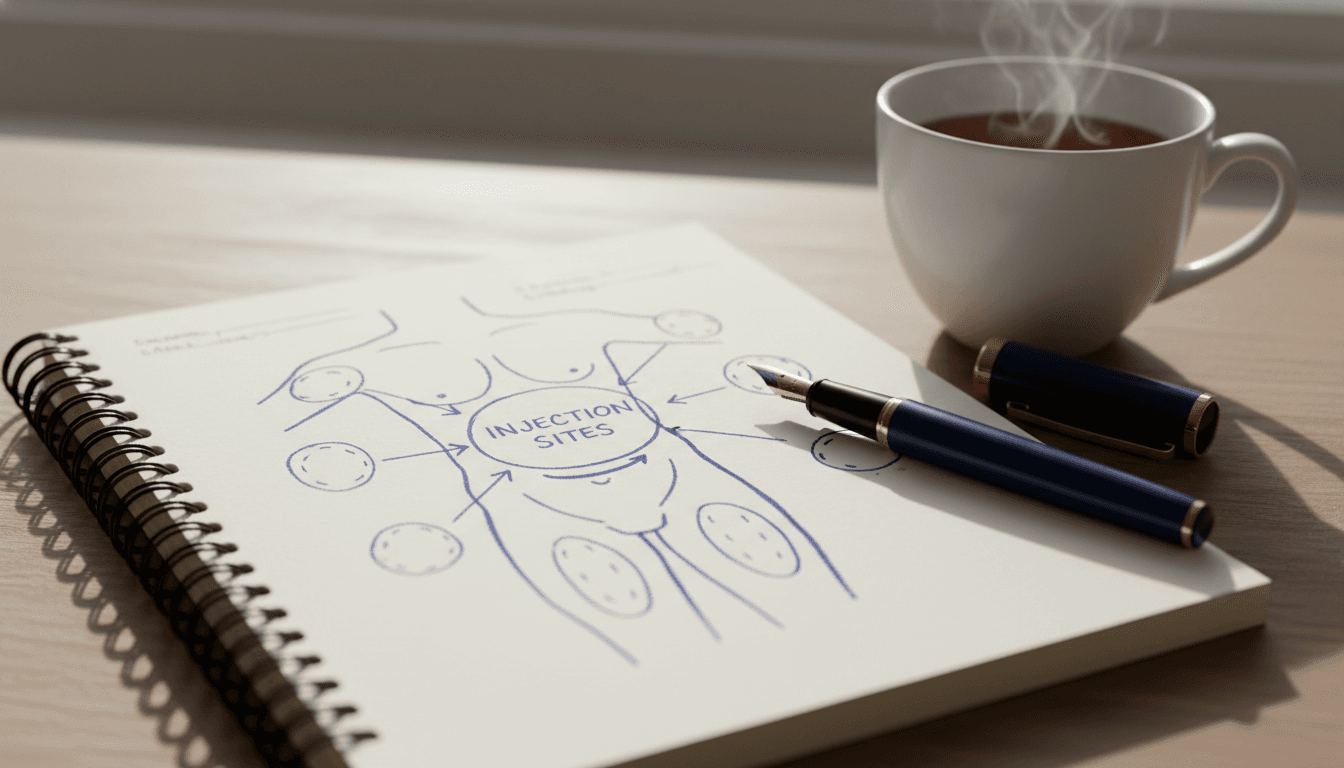
- 02A caregiver helps when sites are hard to reach. The back of the upper arm is difficult to inject into yourself. If your rotation plan uses the arms, a caregiver makes that site practical while you keep the reachable sites for solo days.
- 03Dexterity and vision change the picture. Arthritis, tremor, or low vision can make drawing an accurate dose and placing a needle harder. A caregiver improves accuracy and safety when fine control or clear sight is limited.
- 04Needle anxiety is a valid reason to share the task. Some people can prepare the dose but not push the needle in. Splitting the steps, with one person drawing up and another injecting, is a reasonable arrangement and better than skipped doses.
- 05A caregiver needs training and their own safety plan. Anyone injecting another person should learn the technique, avoid recapping needles, and treat a used needle as a needlestick risk. Our sharps disposal guide covers safe handling for two-person setups.
- 06Keep the routine identical whoever injects. Same hygiene, same site rotation, same slow steady push. Consistency between self and caregiver injections keeps the dose reliable and the rotation plan intact.
Frequently asked questions
Can I inject a GLP-1 or peptide myself?+
For most people yes, using reachable, visible sites like the abdomen or front thigh. A short learning curve is normal. A caregiver helps mainly with hard-to-reach sites or limited dexterity or vision.
When should a caregiver give the injection instead?+
When sites like the back of the upper arm are needed, when arthritis, tremor, or low vision limit accuracy, or when needle anxiety stops you from completing the injection yourself.
Is it safe to split the steps between two people?+
Yes. One person can draw up and another can inject if needle anxiety is the barrier. Both should follow the same hygiene, and the used needle still goes straight into a sharps container.
Does a caregiver need training?+
Yes. A caregiver should learn correct technique, never recap a needle by hand, and treat a used needle as a needlestick risk. See our sharps handling and disposal guides.